📰 This article is based on CNET's fold-durability testing (published November 2, 2026) and CNET's comparative battery testing (November 9, 2026), Macworld's iPhone Duo guide (updated November 5, 2026), and reporting from Fortune, Gadget Review and Notebookcheck. Prices are US unless stated; UK pricing and stock vary. The cause of the reported inner-display cracks has not been confirmed, and Apple describes the affected batch as a "small number" of units.
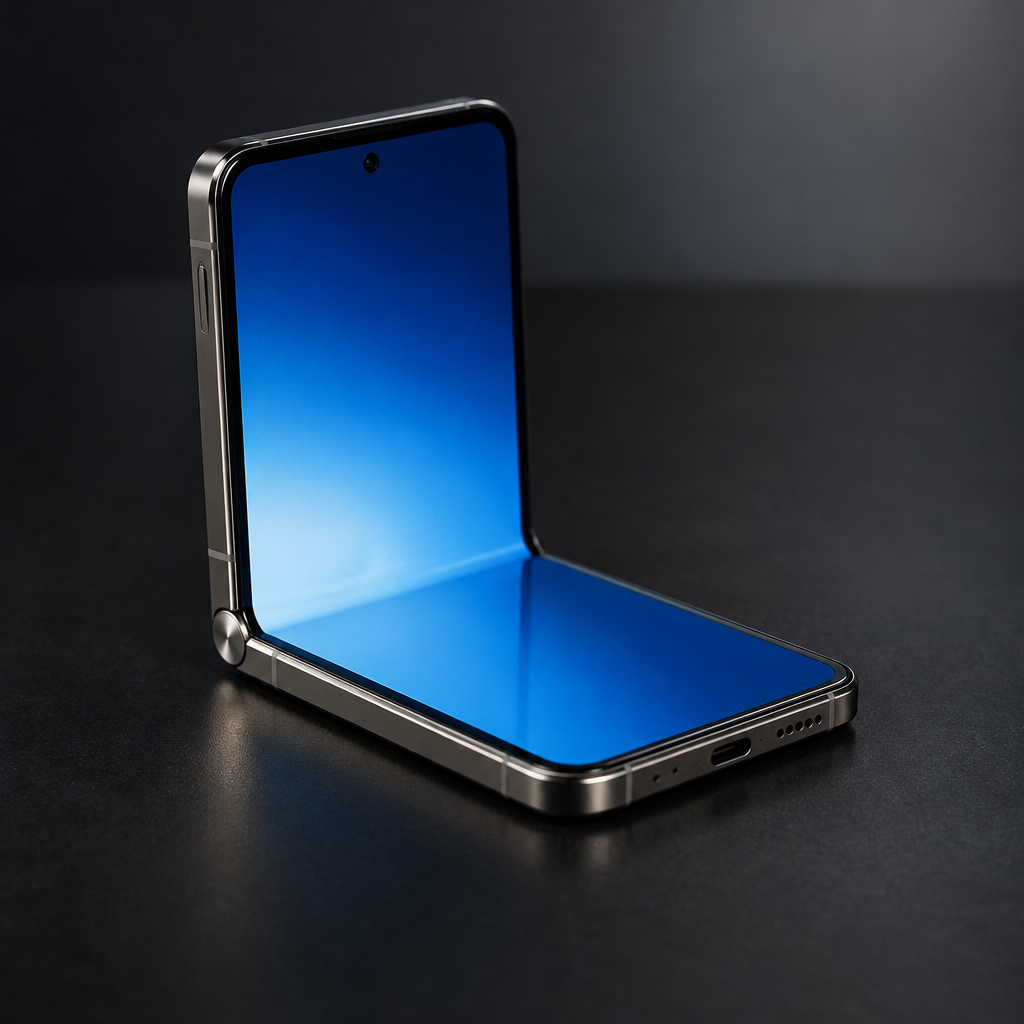
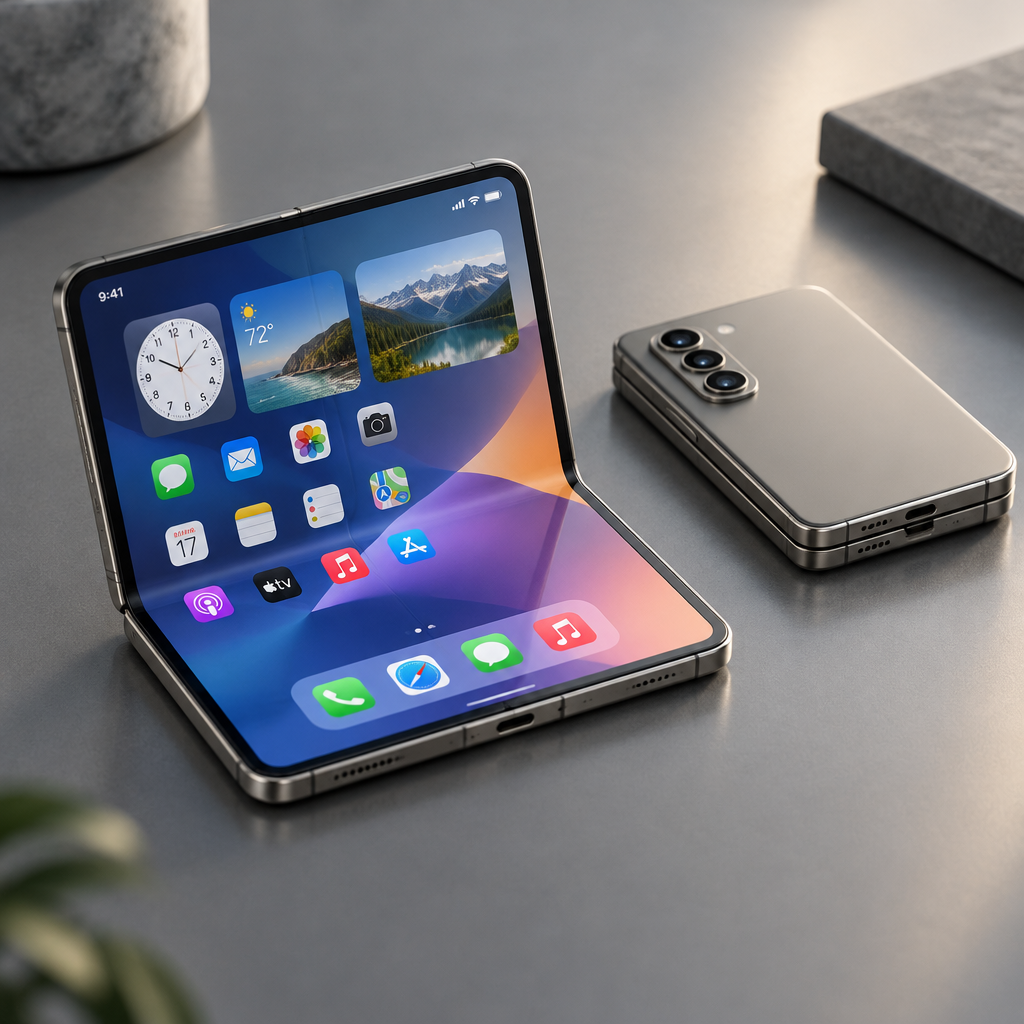
Two weeks ago the iPhone Duo looked like a PR disaster in slow motion: a $1,999 foldable that sold out in minutes, then started cracking in owners' hands. The story wrote itself, and plenty of outlets wrote it.
The data that's landed since tells a messier and much more interesting story. Independent lab testing has now pushed one Duo past the point where most foldables are even rated to survive, and the same phone has quietly beaten every rival foldable in battery testing. Here's what's actually known about Apple's first foldable after a fortnight in the wild.
207,000 Folds, and Still Going
CNET's lab in Louisville, Kentucky built a rig called the Fold-a-Phone specifically for this launch: two motorised armatures, a four-second open-and-close cycle, roughly 900 folds an hour, cameras on every angle and proximity sensors that stop the machine if anything goes out of alignment. They bought a Duo with their own money and set it bending.
By the morning of Monday, November 2, CNET's unit had passed 207,000 folds. Lab director Matthew Murray reported no visible damage and a crease no more pronounced than the day it came out of the box. Most current foldables are rated somewhere between 200,000 and 500,000 folds, so Apple's first attempt has now cleared the bottom of that band without complaint. Apple itself has never published a fold rating for the Duo.
That is not a clean bill of health. A machine folding a phone on a bench is not the same as a phone living in a pocket with keys, grit and a drop onto a kitchen floor. CNET is careful to say so, and the test continues. But it does put the launch-week panic in perspective: if the hinge were fundamentally fragile, 200,000 cycles is exactly where you would expect to see it fail.
What the Cracking Reports Actually Amount To
The failures are real, and they deserve to be stated plainly. Within hours of the October 23 launch, some owners reported cracked inner displays and bright lines along the fold. Fortune covered a possible cause emerging; Gadget Review tracked reports of devices breaking worldwide with minimal use; Notebookcheck documented one case at roughly six hours of ownership.
On October 26, Apple acknowledged an inner-display issue affecting a "small number" of units and told affected customers to contact AppleCare for a replacement. That is still the position. The cause has not been confirmed and no failure rate has been published, which is the detail that matters most. There is a meaningful difference between a design flaw affecting every unit and a bad production batch affecting some, and two weeks in, nobody outside Apple knows which this is.
What is clear is the repair maths, because iFixit dug it out of Apple's US pricing. Replacing just the inner screen's top cover layer costs $49, or a $19 service fee with AppleCare+. Replacing the inner display itself costs $999 without AppleCare+, or $99 with it. If you buy a Duo and skip AppleCare+, you are personally underwriting a four-figure repair on a first-generation folding screen. That is the single most expensive decision in the whole purchase.
The Battery Result Nobody Expected
Here is the finding that deserves more attention than it got. CNET tested five book-style foldables this year, and the iPhone Duo finished with the highest average score of the group.
Its numbers: a 4,883-mAh dual-cell battery, 99 per cent remaining after CNET's 45-minute endurance test (the best in the class), and 84 per cent after a three-hour streaming test, which put it just behind the Motorola Razr Fold, Galaxy Z Fold 8 and Z Fold 8 Ultra. Across all phones CNET tested in 2026, folding or not, the Duo sits in the top five. Only the iPhone 18 Pro Max beat it overall.
Macworld's guide credits the same combination: an A20 Pro on a 2nm process, vapour-chamber cooling, and a dual-battery architecture split across the two halves of the phone, which Apple rates for up to 44 hours of video playback on the outer display. The lesson is that Apple's late arrival bought it a more efficient chip than its rivals, and efficiency beat raw capacity. The Razr Fold carries a 6,000-mAh silicon-carbon battery and still didn't win the average.
Where the Duo Still Loses
Three weeks of ownership reporting has not made the compromises disappear:
- There's no Face ID. Touch ID in the side button is the trade for a folding display, and it's a genuine step down if you're used to glance-unlock.
- No telephoto lens. Two 48MP cameras, main and ultra wide. The iPhone 18 Pro and Pro Max still own the zoom end.
- You probably can't buy one. Delivery estimates are running to January 22, 2027 in the US and January 25 in the UK, and walk-in launch stock went in hours. Competitors are meanwhile discounting: Samsung cut $300 off the Galaxy Z Fold 8 in the run-up to Black Friday, and Google's Pixel 11 line has seen similar deals.
- Accessories are a tax. Apple's own case is $79/£79 and leaves the hinge exposed; the hinge-protecting Duo Folio with Kickstand is $129/£129.
If you do track one down, budget for a case with proper hinge protection and a high-capacity power bank. The Duo's battery is excellent, but a 7.6-inch inner display drains faster than a slab phone when you're actually using it.
So: Buy, Wait, or Skip?
Buy now if you're deep in Apple's ecosystem, you want the folding form factor with your existing apps and Apple Watch, and you're buying AppleCare+ on day one. The battery and durability evidence is stronger than the launch coverage suggested.
Wait if you're buying as an investment. Delivery is January anyway, which means by the time a new order ships you'll be three months from the second-generation rumours, and Apple's fold rating and failure data will be public. Patience costs you nothing here because you can't get one quickly regardless.
Skip if you want a phone you never think about. An iPhone 18 Pro or Pro Max is cheaper, has Face ID and a telephoto, and doesn't hinge on a $999 repair exposure.
The Bottom Line
The iPhone Duo's first fortnight gave us both stories at once: a real quality problem that Apple is quietly fixing, and lab evidence that the underlying design is more robust and far more efficient than the doom coverage implied. Both can be true. The cracks are a batch problem until someone proves otherwise, and the fold test is the number to watch. CNET is still folding, and when that machine eventually stops, we'll know a great deal more about Apple's first foldable than we do today.
Some links above are affiliate links, which may earn ZazzyTech a small commission at no extra cost to you. As an Amazon Associate, ZazzyTech earns from qualifying purchases.